

Published on: December 1, 2021 Updated 5 times since publishing
Jump down to fill out our survey about women’s safety!
Personal safety is a basic human right that no one should have to live without.
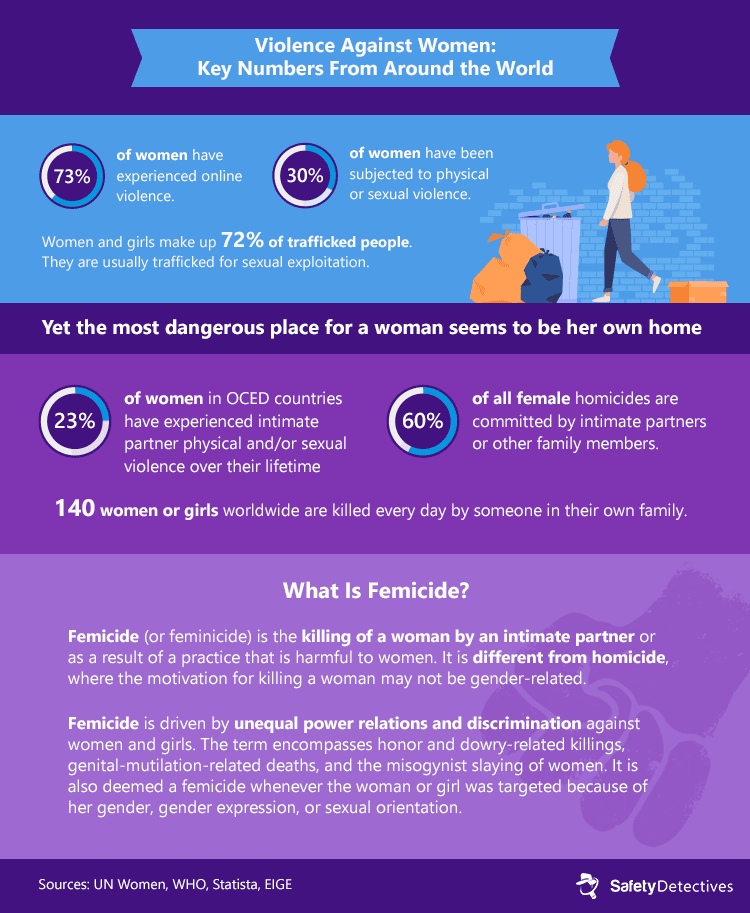
Globally, nearly 1 in 3 women experience physical or sexual violence in their lifetime, facing daily threats to their safety in both private and public spaces.
This is intolerable, and here at SafetyDetectives, we believe it needs to change. The world should be a safe place for everyone — regardless of their gender.
To help raise awareness and shed light on this issue, we decided to research countries around the world to see which are the safest and most dangerous for women, in terms of the number of crimes committed against them and the laws protecting them.
This process proved to be incredibly complex, as we had to rely on official data that may or may not accurately reflect reality. The results of our research depended on each country’s level of transparency about the number of crimes against women, as well as women’s ability and willingness to report these crimes in the first place.
Below, we’ll explain our findings and explore the ways that governments, organizations, and individuals can work to increase and ensure women’s safety.
A Culture of Violence Against Women
Historically, most societies around the world have not prioritized women’s safety or been particularly kind to women in general. In many ways this is improving, and we’ve come a long way — but there’s still a long way to go.
Many scholars believe this phenomenon is deeply ingrained in various cultures. Some research suggests that patriarchal societies became the norm around 12,000 years ago, when humans started practicing large-scale agriculture and settling down.
This societal change arguably planted the seeds for gender-based inequality, discrimination, and violence — and we’re still reaping the results. From seemingly insignificant acts of disrespect to life-threatening crimes, there’s evidence everywhere of a collective tendency toward violence against women.
Take, for example, the male gaze: a term that refers to how women are commonly portrayed in the media through the lens of a heterosexual male perspective. The male gaze turns women into sexual objects that exist primarily to please men. This implicitly normalizes the control and abuse of women by dehumanizing them.
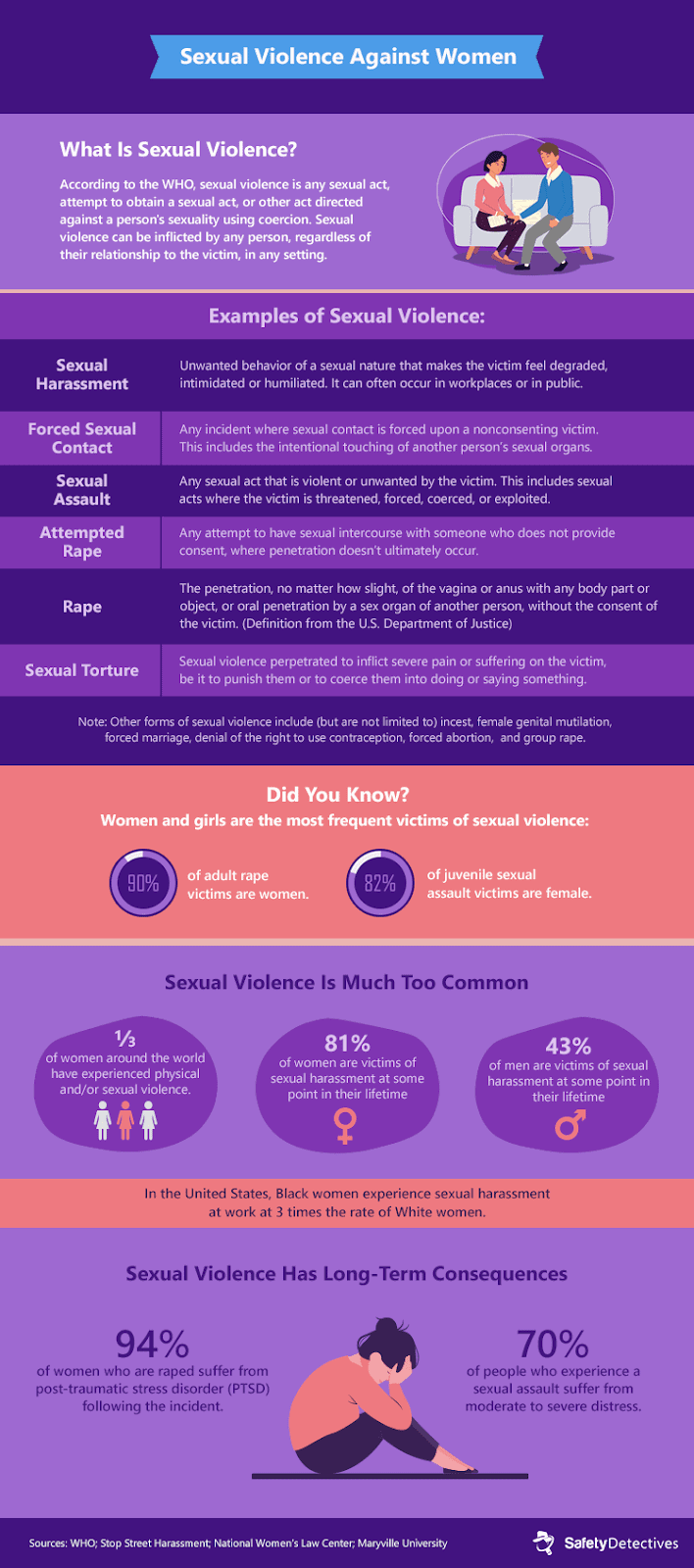
Now, think of the horrific stories that surface every so often about innocent women being harmed or killed. They temporarily take hold of the public consciousness because they’re specific and shocking. But the truth is that only a tiny percentage of the victims of these kinds of crimes make it into the news. What about the rest of them?
Tragedy Sparks Outrage and Action
In March 2021, one story took on symbolic significance: the case of Sarah Everard, a 33-year-old woman who was abducted and murdered by a police officer while walking home at night in London.
This story drew international attention — not because it’s an incredibly rare or unbelievable occurrence, but because it validated the constant fear that many, if not all, women face when they’re out alone anywhere in the world.
The public response to this tragedy was overwhelming and unique. Women from all cultural contexts and socioeconomic backgrounds spoke up to share their own experiences. They connected over their shared fears and coping strategies, bringing the global lack of women’s safety into the spotlight.
One woman shared a screenshot of a simple message reading “text me when you get home,” which immediately went viral. Many women who saw that post, myself included, instantly remembered all the times that they’d sent it to or received it from their friends.
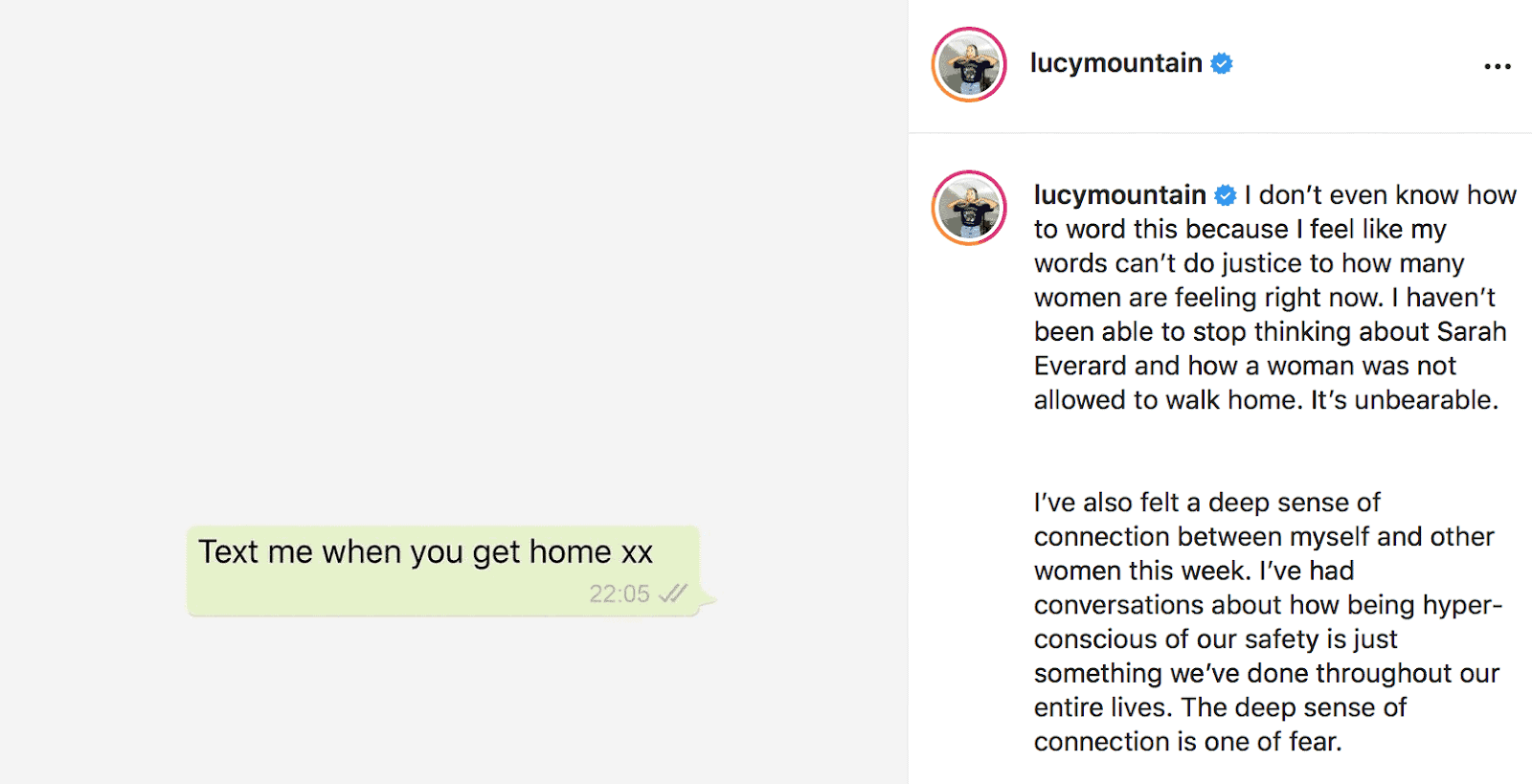
Source: @lucymountain
We always need to ensure that our female friends make it home, because there’s always a possibility that they’ll be threatened in some way before they get there. The prevalence of street harassment is a reality that most women have learned to accept.
But Sarah Everard’s death and the conversation it sparked reminded all of us that we shouldn’t have to accept this reality. We shouldn’t take this kind of fear for granted or allow this violence to continue. We should speak up and do whatever we can to protect each other.
The first step toward solving any problem is understanding its roots and manifestations. That’s why we set out to conduct this research — in the hope that studying and writing about the issue could help in some small way to rectify the injustice of violence against women.
Researching Women’s Safety Around the World
Although our initial goal was to determine which countries are the safest and most dangerous for women, our research ended up taking a different turn. It’s extremely difficult to quantify something as complex as safety — especially as it applies to an enormous number of people living in very different cultural, political, and economic circumstances.
That said, we do believe that our rankings on crimes and laws reflect valuable information about the countries studied — though not necessarily in the most obvious way.
Regardless of where different countries rank on our lists, every single country must keep working to ensure that women can easily and safely report crimes committed against them. And, in addition to building women’s safety into its legal system, each country should also make sure that the relevant laws are implemented, enforced, and upheld throughout society.
Part 1 – Crimes Against Women
For the first part of our research, we set out to study how many women in each country have been victims of extreme violence. The logic behind this is simple — the fewer gender-based crimes committed, the safer the country for women.
We drew data from publicly available government statistics, official police reports, and studies by reputable institutions such as the WHO, the UN, RAINN, and other organizations dedicated to women’s safety. Ultimately, we rated 78 countries based on four categories:
- Murder of women – The murder rate per 100,000 women between 2010 and 2020.
- Rape – The rape rate per 100,000 women between 2010 and 2019.
- Sexual abuse – The sexual abuse rate per 100,000 women between 2010 and 2020 (excluding reports of rape).
- Domestic violence – The average percentage of women (aged 15 and older) who were victims of physical or sexual violence from an intimate partner between 2010 and 2017.
All the rates were calculated based on the total female population of each country, and the data for crimes is based only on officially reported cases. As these kinds of crimes often go unreported – from sexual assault in the US military to the murders of trans women – we can assume that the actual number of occurrences is higher in all countries.
Nevertheless, we relied on official statistics to calculate the rates mentioned above for all 78 countries. Then, we normalized the data and calculated a weighted average score for each one. You can check the full details of our methodology further down the article.
Our Ranking: Crimes Against Women
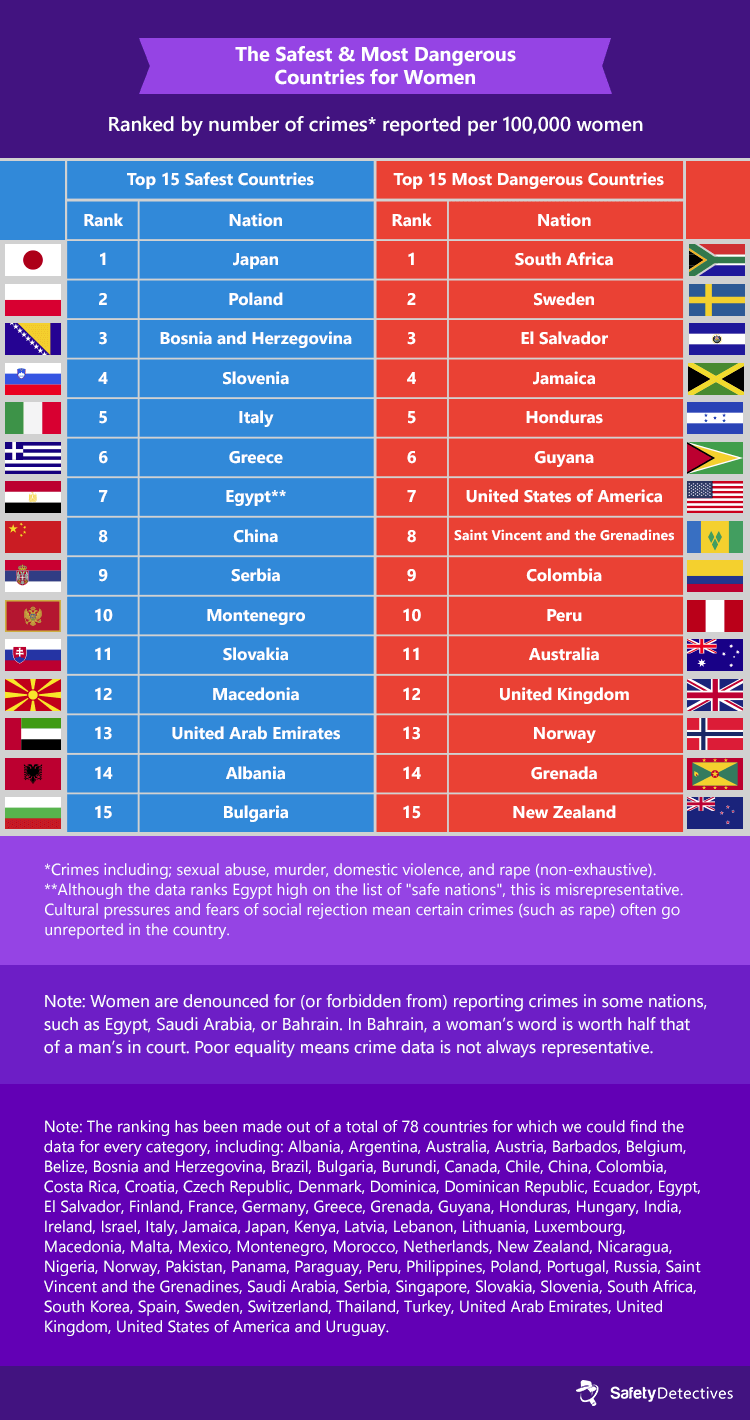
Although we used data from a variety of sources and sought to be as objective as possible, we should start by saying these rankings do not necessarily reflect the safest and most dangerous countries for women in reality.
On the one hand, the data available is limited to crimes that were reported to police, which do not represent the full picture of violent crimes actually committed against women. On the other hand, the number of reports may be misleading.
Ironically, a lower number of reported crimes may actually mean that a country is less safe for women. Such few reports could signify that violence against women is normalized, or that women face greater barriers to report it. For instance, in some Middle Eastern countries, women who report sexual assault could go to prison or even be killed to protect their family’s honor. The countries in bold below are likely examples of this.
Countries With the Lowest Number of Reported Crimes Against Women
Countries With the Highest Number of Reported Crimes Against Women
On the other hand, while it should not be considered a good thing, having a high number of reported crimes means there are processes in place that make it possible for victims to report them. Ensuring reports are made plays a big part in guaranteeing women’s safety — it’s often the first step in the process so the police and the justice system can do their jobs.
Take Sweden, for example. While it often ranks highly on other lists of the safest countries for women, we found that it has the highest reported rape rate in Europe. The fact that countries like Norway, Australia, and New Zealand also rank highly on this list suggests that reporting may be much more common there, or that the definition of rape is broader — and not necessarily that more crimes are committed in these countries.
Women’s Rights in Iran
We weren’t able to include Iran in this part of our research because it doesn’t provide any official data on crimes against women. Domestic violence, marital rape, and sexual assault aren’t considered crimes in Iran and generally aren’t talked about, so there is a lack of information regarding their prevalence. There also isn’t any legislation or civil remedies on sexual harassment in the workplace.
Women in Iran do not have the same rights as their male counterparts. In court, a woman’s testimony is worth only half of a man’s. Other forms of legal discrimination that women face include not being able to apply for a passport, travel outside the home, or get a job without their husband’s permission, which significantly impacts their freedom of movement and financial independence.
Iran enforces sharia law, which states women have a duty to be obedient to their husbands. Women can’t refuse sex within marriage unless they are sick, menstruating, traveling, or experiencing lochia after giving birth. Furthermore, rape victims do not generally come forward in Iran because they can be prosecuted for indecency, immoral behavior, or adultery, which is punishable by death.
Islamic law in Iran also enforces a modest dress code. For men, this means that they cannot wear sleeveless shirts or shorts in public, while women are required to cover their hair and wear a coat or tunic over top of their clothes. But hijabs weren’t always mandatory in Iran; in fact, they used to be forbidden. This changed with the 1979 Islamic Revolution, and now they are strictly enforced, as evidenced by the murder of Mahsa Amini.
The 22-year-old Kurdish woman was taken into custody by Iran’s morality police after visiting relatives because her head covering was too loose. According to eyewitnesses, Amini was tortured in the police van following her arrest, then again at the police station before she was hit over the head and collapsed. She was declared brain dead and died on September 16, 2022. The police denied beating her and claimed that she had suffered a heart attack.
Part 2 – Women’s Legal Rights
For this ranking, we looked into the legal protections that women around the world have access to. We considered laws covering 14 different issues, such as abortion, pregnancy discrimination, work restrictions, marital rape, voting rights, among others. You can check the full list and all the details of our methodology at the end of the article.
While the laws regarding crimes (e.g. murder, rape) may seem more directly related to women’s safety, it’s important to recognize the impact of other laws as well. If women have fewer rights and less independence than men according to the law, that means they have less power. This makes them more vulnerable to discrimination, mistreatment, and abuse of all kinds — it makes them less safe.
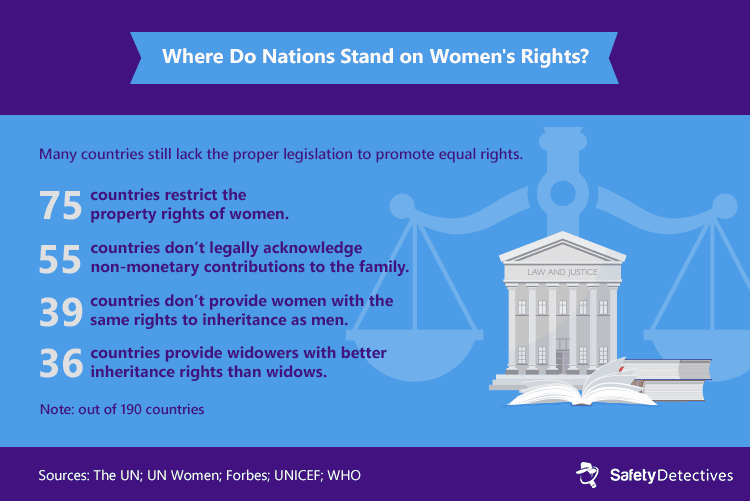
As it was much easier to find information regarding laws than it was to find data on violent crimes against women, this part of our research included 192 countries. We assigned a point value depending on whether or not each country has relevant laws in place. For instance, if a nation has a law against domestic violence, it scores zero in this category; if there’s no law against domestic violence, it scores 1.
This means that the lower a country’s score, the better for women’s safety — at least in theory. We must keep in mind that just because a given country has laws in place to protect women, it doesn’t mean the laws are necessarily working. They may not be enforced or followed. One example of this is Cambodia, where women are legally protected in theory, but much less so in reality.
Our Ranking: Women’s Rights and Legal Protection
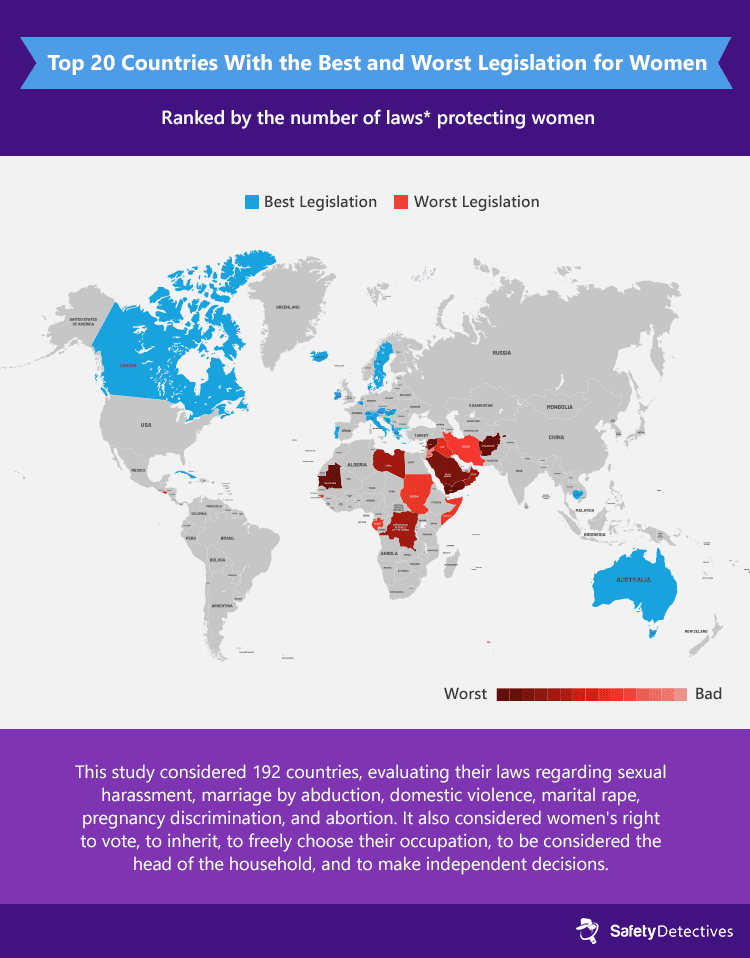
These are the results of our research into laws regarding women’s safety. Keep in mind that a given country’s ranking below does not reflect the actual level of safety for women living there, but rather the extent to which they are protected by law on paper — not necessarily in practice.
The countries with the most favorable laws for women may not actually be the safest, but they are making the effort to create systems that support safety — and that’s crucial. Countries with unfavorable laws would be hard-pressed to promote women’s safety without updating their legal systems.
Countries With the Most Favorable Laws for Women
The top 20 countries on this list all earned the best possible score (0) in our research, indicating that they have the best possible laws in place in all areas studied. They’re listed here in alphabetical order.
Countries With the Least Favorable Laws for Women
*Following the Taliban’s return to power in August 2021, when sharia law was implemented, Afghanistan moved up to #1 on this list.
Case Study: Women’s Rights in Afghanistan
Today, Afghan women are almost entirely shut out of social, economic, and political life, but this wasn’t always the case. Before the 80s, women in Afghanistan enjoyed similar freedoms to women in much of the Western world. However, when the fundamentalist Islamic group Taliban took over, Afghan women lost many of the freedoms their male counterparts continued to enjoy.
Their plight was only slightly mitigated when the Taliban government collapsed in 2001 following the United States’ all-out offensive against the group. However, the continued and protracted conflict left women suffering much of the brunt of the economic, social, and cultural consequences of the civil and political unrest.
In 2020, the atmosphere of the conflict in the country started to change. A deal was made to gradually withdraw all U.S. troops in exchange for the Taliban stopping attacks on Americans. The war in Afghanistan turned a new chapter on August 15, 2021, as Taliban forces entered and regained control of the capital.
Notoriously fundamentalist, the Taliban-controlled state has only made matters worse for girls and women in the country. According to the Global Gender Gap Report of 2022, Afghanistan placed last among 146 countries in terms of gender equality. Included in the evaluation were fairness among genders in economic participation, educational opportunities, health conditions, and political empowerment.
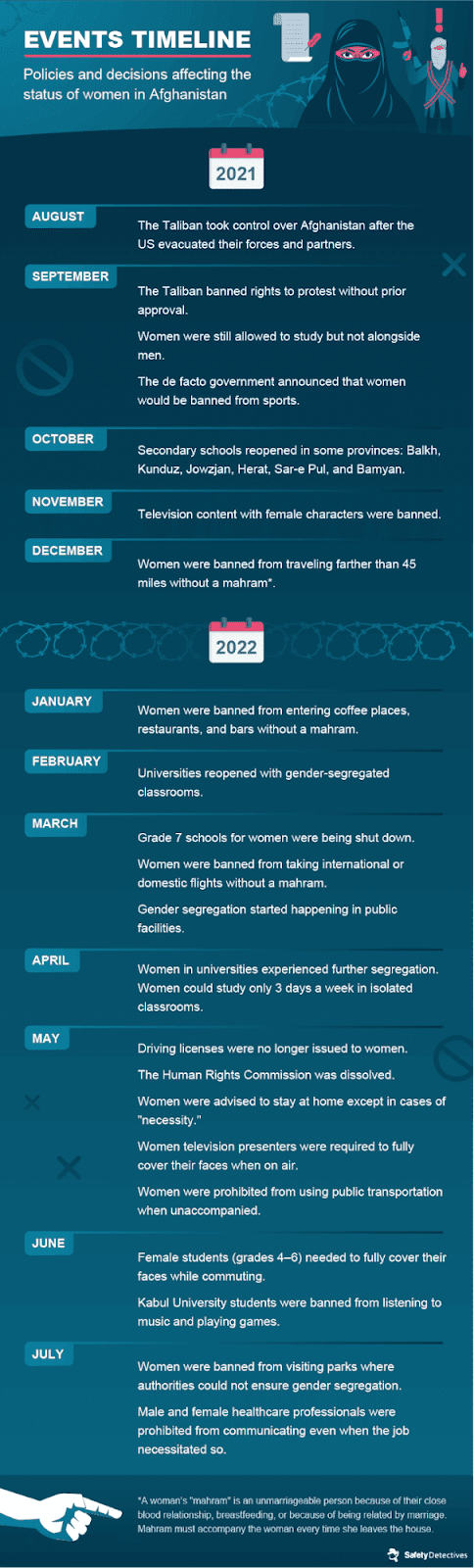
As reported in the UN Women’s Gender Alert series, the Taliban rule has fostered an intolerant mindset toward women and created a “fertile environment” for abuse. Women have to rely on male relatives or household members to meet their basic financial needs and to travel outside the home. This restricts their ability to report and escape from domestic violence, especially when the abuser is an intimate partner or household member.
Afghanistan’s 2009 Elimination of Violence Against Women (EVAW) law encouraged reporting and investigation of gender-based violence and discrimination, with occasional convictions in favor of the victim. However, women and girls are still pressured to not report abuse cases and to seek family intervention instead, especially when the suspects are male relatives.
Moreover, even if women were to come forward, the system is not in their favor. Police are often hesitant to arrest reported husbands, gender-based violence reports are deferred to informal courts with traditionalist views, legal representation for Afghan women is severely lacking, and women can be treated – and prosecuted – as the guilty party. In extreme cases, this can lead to being executed in state-sanctioned “honor killings.”
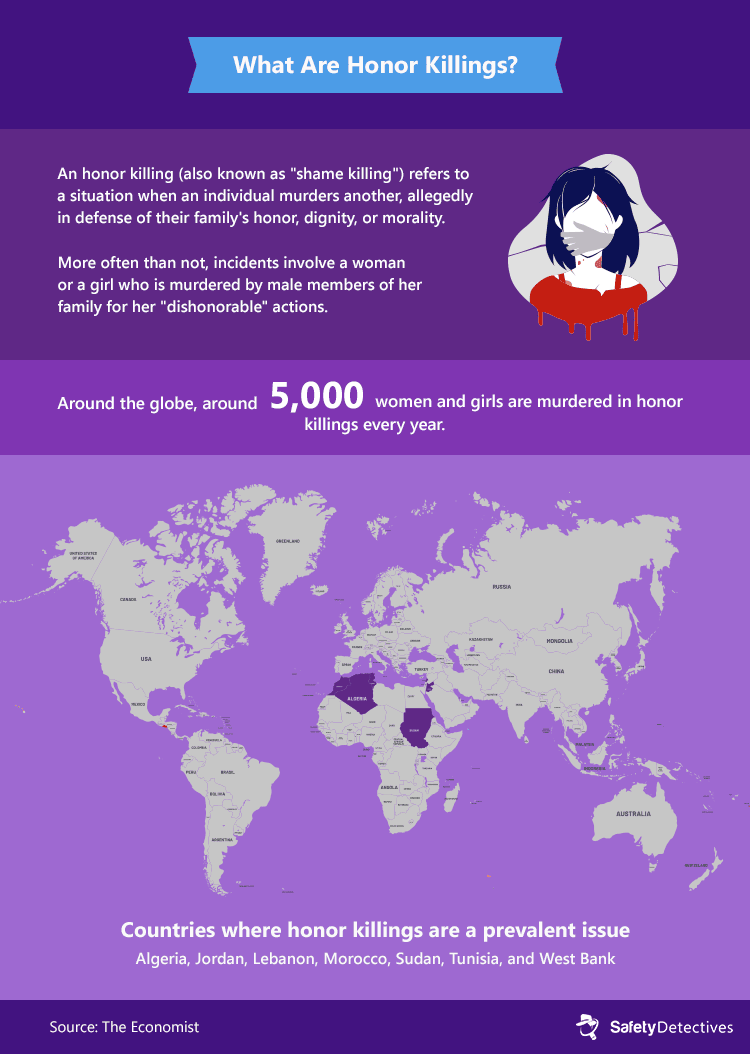
The UN Assistance Mission in Afghanistan (UNAMA) recorded two reports of honor killings from August 2021 to June 2022, along with 87 cases of violence against women and girls. A 2021 report by the Human Rights Watch labeled honor killings as “widespread” in rural areas, where they go unreported.
Women in Afghanistan also face notable limitations in specialized care, especially concerning reproductive health. The main issues include access obstacles (including mobility restrictions), supply shortages, and staffing difficulties.The lack of reproductive care for Afghan women typically equates to pregnancy-related sickness, complications, or death.
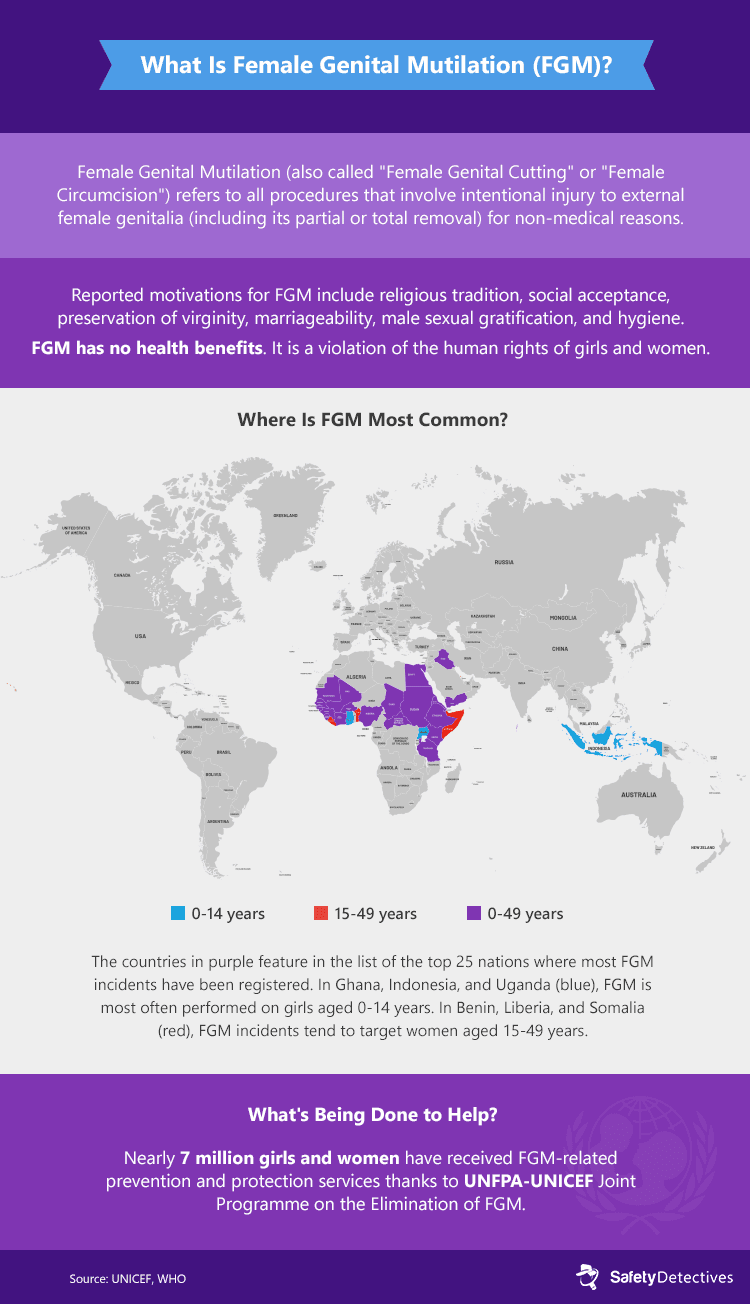
Although there’s no official data for its prevalence in the country, certain indications suggest that Female Genital Mutilation is still practiced in some areas of Afghanistan, typically before girls turn 16 years old.
Authorities and personnel for gender-based violence have likewise been removed or fled the country. The Afghanistan Independent Human Rights Commission (AIHRC) and the Afghanistan Independent Bar Association (AIBA) have been dissolved. Additionally, organizations assisting victims of gender violence were reportedly targeted and threatened for their work. Most have since ceased operations or been shut down.
Education Can Help Women Stay Safe
Studies by UNICEF and Amnesty International on intimate partner violence in impoverished countries found that uneducated girls are more likely to be forced into child marriages. They are also more susceptible to gender-based violence perpetrated by men due to lower levels of self-determination and empowerment.
Similar research reveals that literacy and basic education help women and girls confront and resolve problems caused by social imbalance. Educated women are more likely to speak up against discrimination and escape abusive situations.
Alas, the discrimination against Afghan women and girls extends to their right to an education. The Taliban, since its takeover, declared that girls cannot yet be permitted to return to school, as a “safe learning environment” has to be established beforehand.
Some districts allow girls in high schools, and universities in Afghanistan are officially open to women, but harassment and discrimination discourage the majority of the female population. This exacerbates the problem of women having fewer job opportunities and chances to participate in the economy.
Women in Afghanistan are facing systematic pressures to stop working. The Taliban decreed in December 2021 that women could no longer leave the house without a male family member to escort them. This restriction on their mobility resulted in joblessness, despite women’s constitutional right to work.
The increasing economic imbalance has led to greater food insecurity. By January 2022, nearly 100% of women-led households reported having insufficient food. According to 2024 data, only 5.1% of women are in the labor force.
The World Health Organization (WHO) conducted a study involving 24,000 women across 10 countries. Their findings suggest that economic or financial insecurity is a leading reason for women remaining in relationships despite intimate partner violence. They depend on their spouses for basic sustenance and lack the ability to earn their own income, which gives them little choice but to stay in abusive and even dangerous relationships.
For the first time in history, the International Criminal Court (ICC) has built a case to tackle systemic violence against women. In March 2025, ICC’s chief prosecutor publicly stated that the Taliban’s supreme leader will be held criminally responsible for the ongoing persecution of women, girls, and LGBTQ+ individuals.
Overall Ranking
After combining both parts of our research, we came up with this final ranking of the best and worst countries in terms of safety for women.
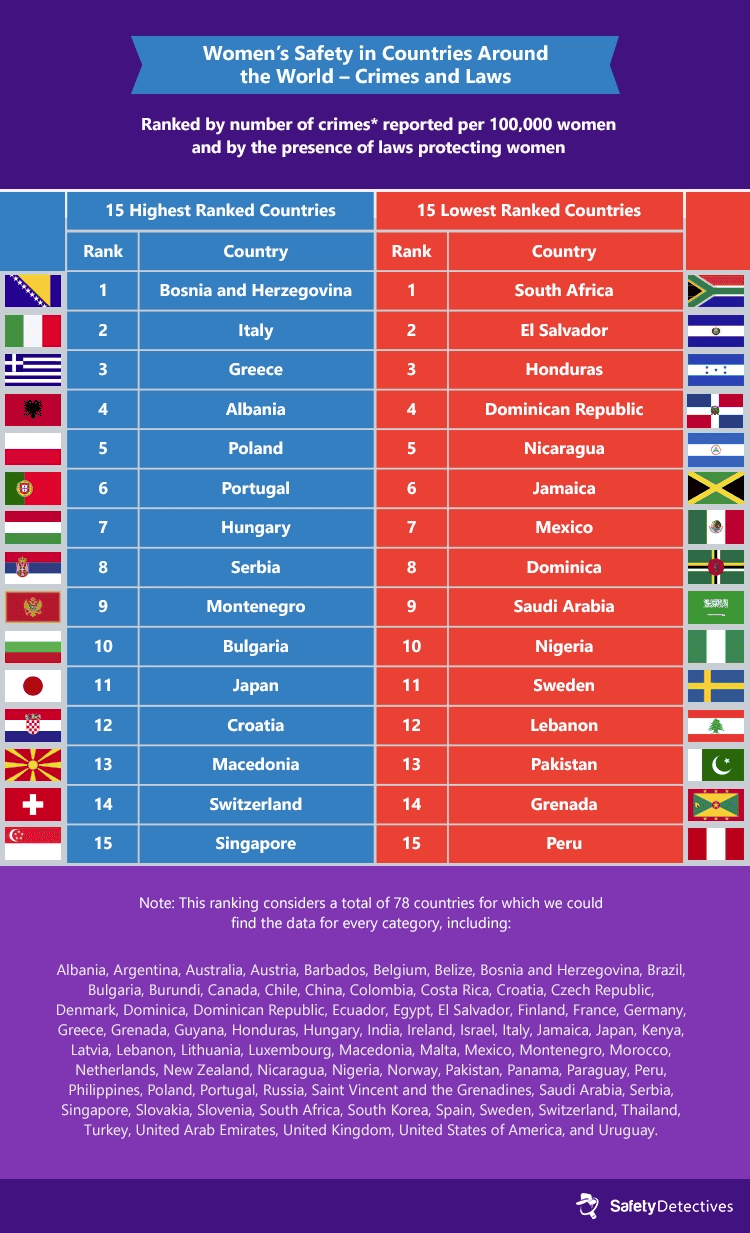
We believe that the rankings presented above are a useful tool for examining the relative levels of (reported) crime and (theoretical) legal protection, but we also recognize that they do not fully address some important related topics we came across as we conducted our research.
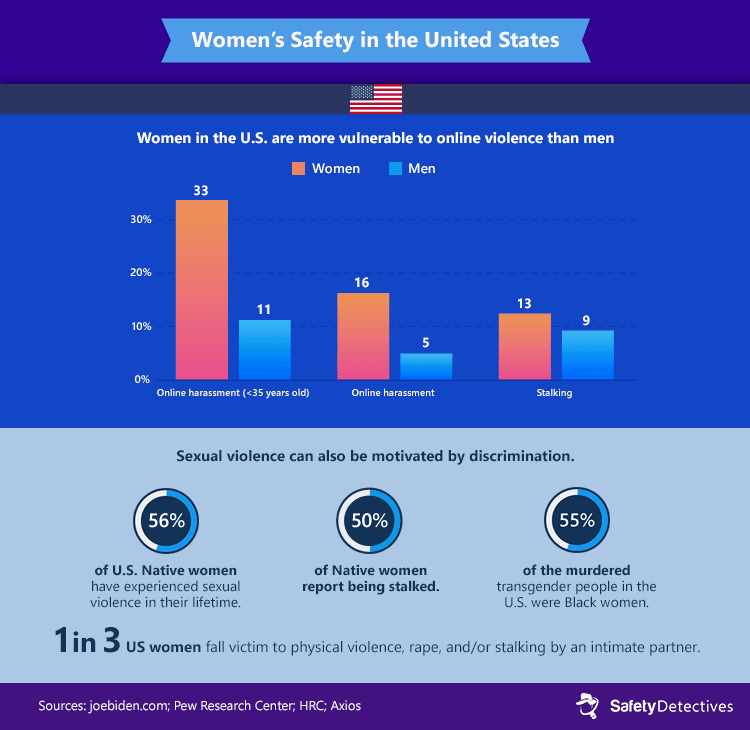
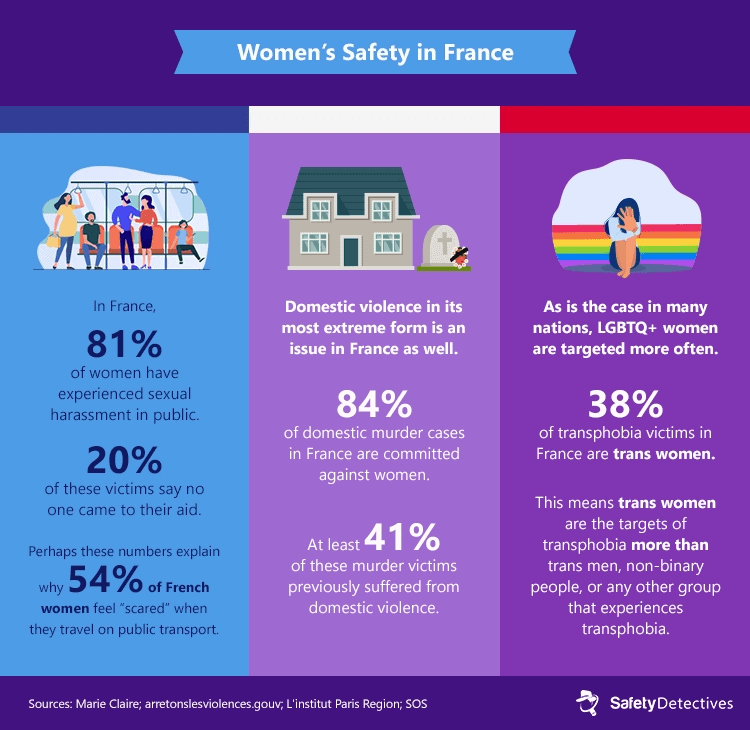
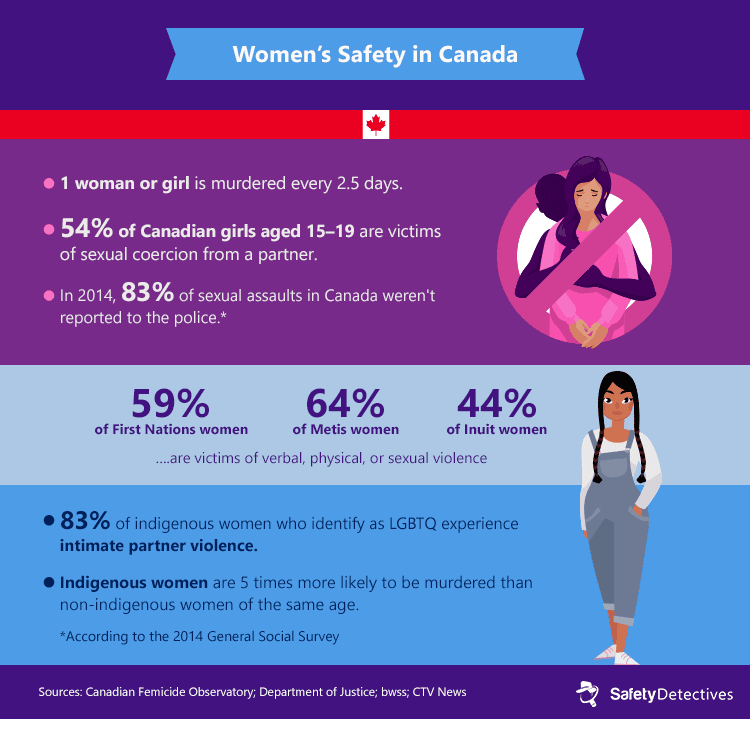
One of these topics is gender identity. Much of the data on violence against women may not include individuals who don’t conform to the traditional gender binary, such as transgender women. In fact, these individuals often face even greater threats due to their gender identity and expression.
Another topic is the way that race and class relate to women’s safety. A full examination of violence against women or women’s rights must take into account the concept of intersectionality, which allows for a more holistic perspective on how different forms of oppression and inequality coexist and compound one another.
What If a Woman Fights Back?
To complement the research we conducted for the rankings above, we decided to look into other factors that may affect and/or address women’s safety in different countries. The first thing that came to mind was the question of self defense, in legal terms.
For example, if a woman is walking down the street alone, is she allowed to carry pepper spray or other weapons she could use to defend herself? Being able to carry pepper spray might not seem like a big deal, but it can make a monumental difference in how women perceive their own safety — and how safe they actually are.
For example, it’s legal to purchase and carry pepper spray in the United States. However, in several European countries, it’s either illegal or requires a weapons license. In Canada, pepper spray is prohibited altogether.
But, regardless of how they do it, what happens when a woman actually defends herself?
Research shows there’s an inherent gender bias in many countries’ legal systems. This affects how they address intimate partner violence cases in which a woman fights back. For example, almost 80% of Russian women convicted of murder acted in self defense, according to a study published in 2019.
One might assume that a simple self-defense law would remedy this injustice, but Russia actually does have such a law in place. The problem is that it also has a law against “exceeding the limits of self-defense,” which essentially nullifies the first law, making it nearly impossible to prove that someone acted within those limits.
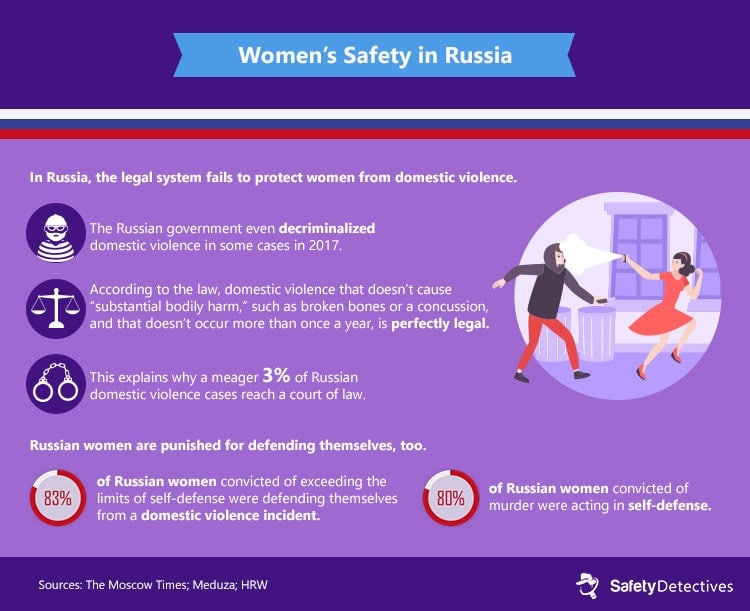
This is just one example that goes to show how legal systems play an essential role in protecting women, especially in terms of self-defense. It is essential for people who influence these systems – from lawyers and judges to politicians and activists – to be aware of how certain regulations and legal precedents can affect women’s safety, both individually and collectively.
In many countries, legal systems are specifically designed to excuse or ignore certain types of violence against women. Take, for example, marital rape; dozens of countries (including China, India, the UAE, and more) either do not address it or explicitly exclude it from their penal codes. This means that it’s completely legal for a man to have nonconsensual sex with a woman who is legally married to him.
Even in countries where marital rape is technically a crime, it often goes unpunished. For example, many states in the U.S. have legal loopholes that allow for exceptions in cases of spousal rape.
Gisèle Pélicot’s story made the world tremble in 2024. Her now ex-husband, Dominique, drugged and raped her for nearly a decade without her knowledge. He also invited other men into their home to do the same, filming the non-consensual encounters, and giving them tips on how to drug their own wives.
Based on these recordings, the French police determined that Gisèle was raped at least 90 times by 83 different men; 50 of them stood trial, 30 of them pled innocence – claiming that they thought Gisèle was in on it – but ultimately all 50 were found guilty.
Although it may seem like justice was served, it can be argued that the perpetrators got off too lightly, considering the case’s notoriety and the harrowing nature of the crimes. Dominique was sentenced to 20 years in prison, others were sentenced to just three years, and some of them served even less than that — just 11 months of his five-year prison sentence, according to The Times.
When Reporting Backfires
Some of the legal systems that are least favorable to women can be found in the Middle East. For example, Saudi Arabia’s system of male guardianship essentially grants men total control over women throughout their lives. This traps many women in a cycle of violence, as societal norms prevent them from reporting abuse or seeking help without assistance from a man.
Even if a Saudi woman manages to report abuse, she runs the risk of counter accusations. “Women may be charged with moral crimes, like khilwa (mixing with unrelated members of the opposite sex), or with fleeing from their homes,” according to Human Rights Watch.
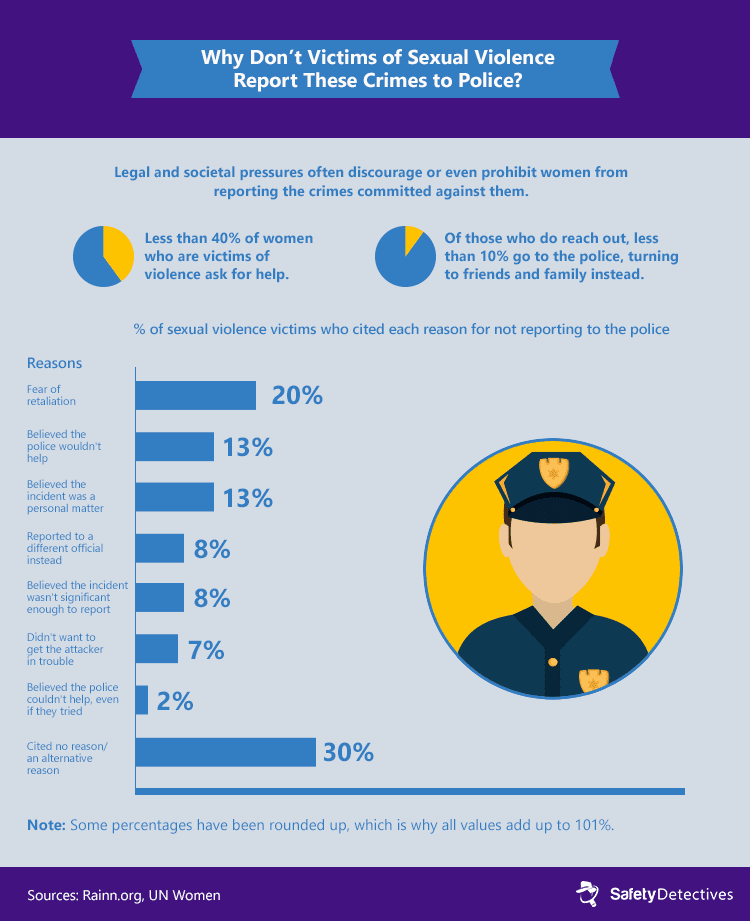
In 2011, an Afghan woman was forced to choose between marrying her rapist or spending 12 years in jail. In 2012, an alleged rape victim in Ireland was arrested for failing to testify against her attackers due to extreme distress. In 2016, a British woman who reported being raped in Dubai was arrested and charged with the crime of extra-marital sex.
The charges against the women in each of these cases may vary, but they have at least one thing in common — they all set a dangerous precedent that discourages women from reporting assault.
The more crimes that go unreported, the more perpetrators get away with abuse. This creates a culture in which violence against women is tolerated, or at the very least, ignored. Men become more likely to assault women, who become less likely to report these crimes. And this isn’t a theoretical situation — this is the global reality we’re experiencing today.
Surveying Women’s Perception of Safety
As a complement to our data-based research, we decided to conduct our own informal survey. We wanted to gain some insight into how safe women perceive their country to be, regardless of what the official numbers may say.
So, we created a small survey and embedded it in this article, leaving it available for our readers to respond. Their participation was, of course, completely voluntary (you can participate too, if you want — you’ll find our survey right below this section, and you can click here to jump there directly).
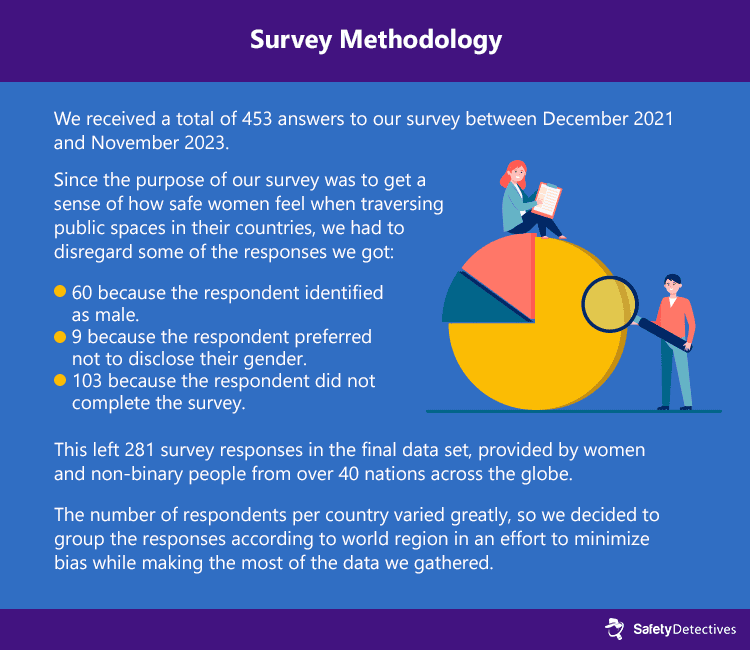
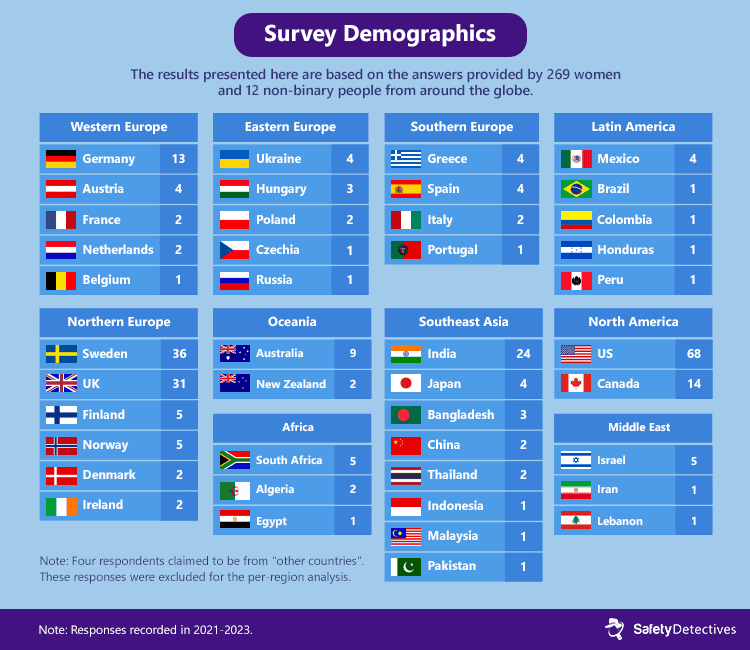
We’ve been recording responses for our survey since this article was first published in 2021. In the images below, you can find the results of the survey up until 2023 as well as a more detailed rundown of our methodology.
Although our sample size is small and not evenly distributed throughout different countries, our results do provide some interesting insights. For example, while over half of the respondents are not afraid to walk alone during the day, more than 80% feel unsafe at night in at least some places.
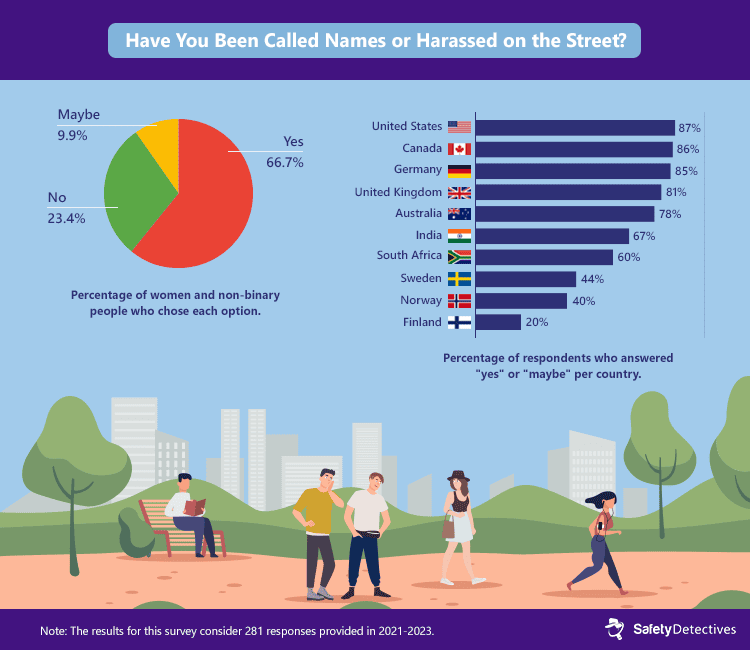
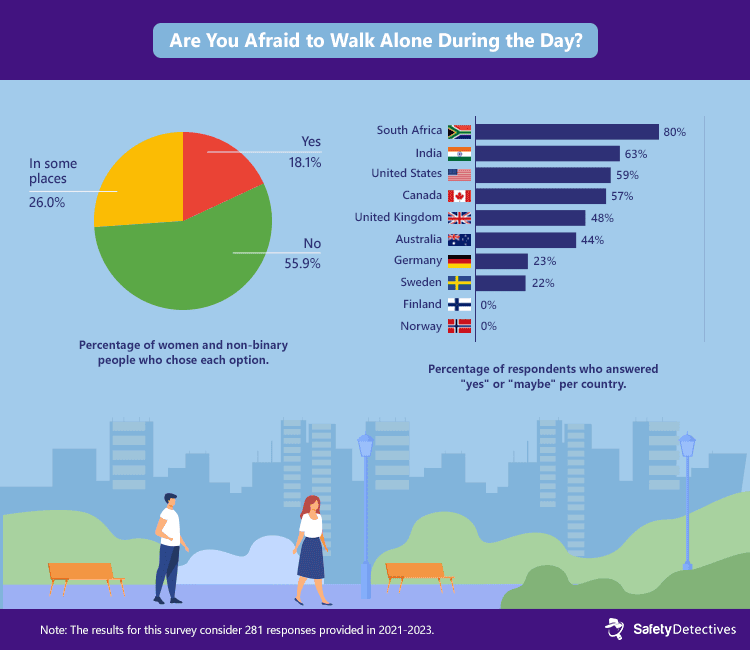
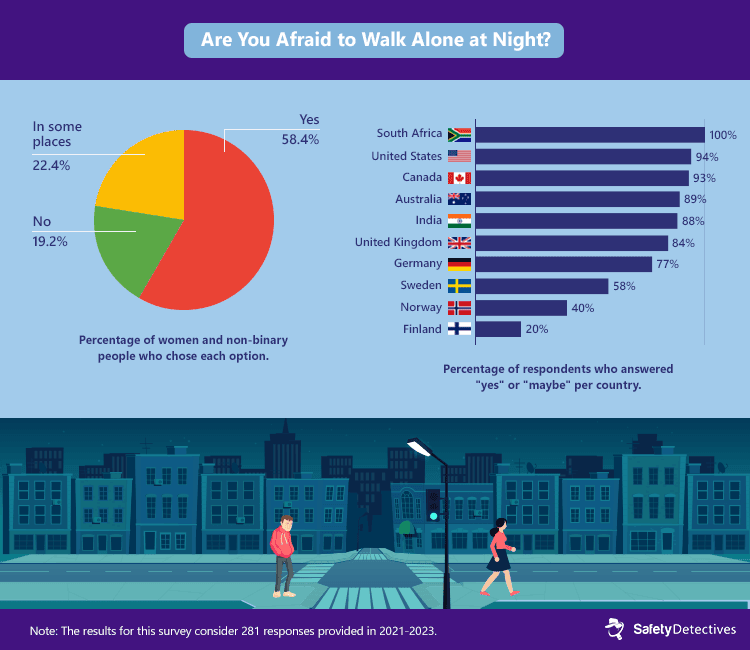
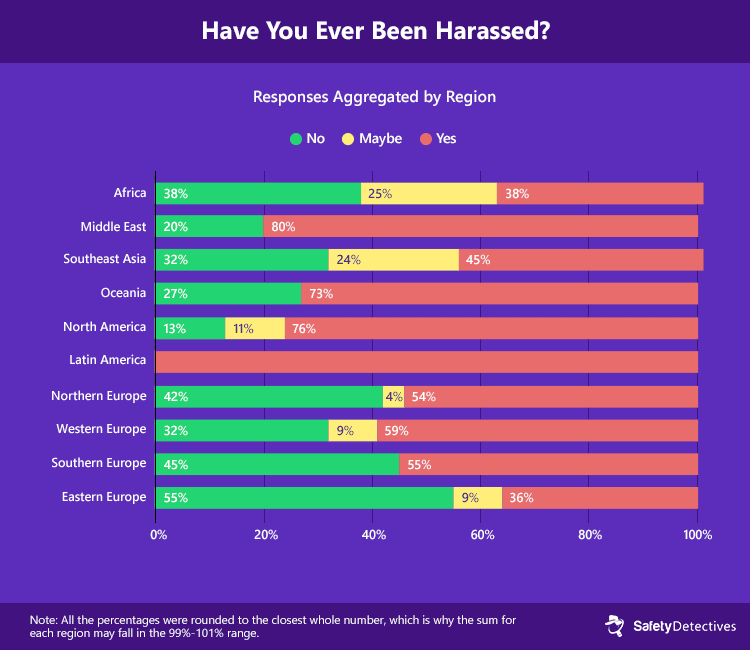
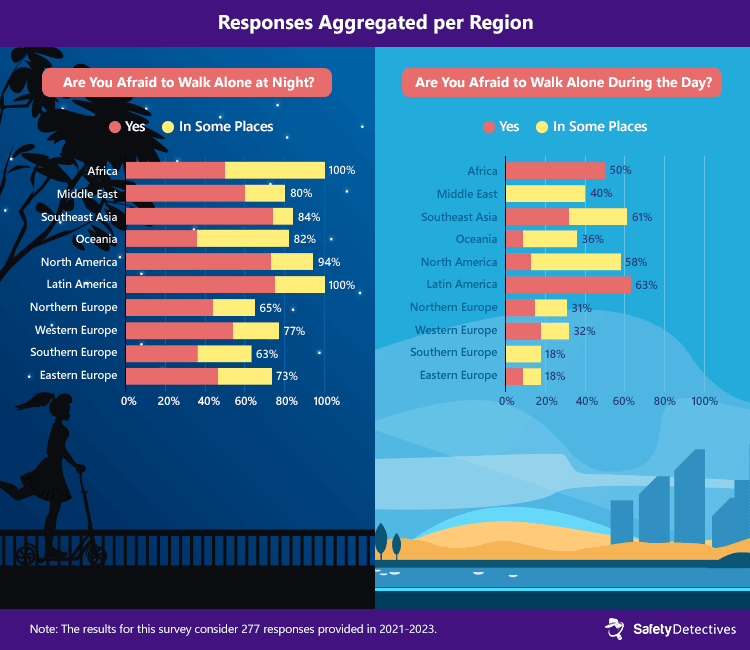
Notably, none of the respondents from Finland and Norway are afraid to walk alone during daylight, and only a few express hesitation about walking alone at night in some places. These two nations have the lowest harassment rates recorded in our survey, suggesting women who live there feel safer than women who live in other countries.
For comparison, women in the Americas seem to feel notably unsafe in public spaces. North American countries have some of the highest harassment rates recorded in our survey, with 88% of Canadian respondents and 87% of U.S. respondents having experienced some form of harassment.
Furthermore, women in Latin America seem to feel less safe walking alone than women in other regions – be it at night or day – and all the respondents from this region answered “Yes” to being harassed. Women in Southern Europe, on the other hand, seem to feel safer than women in other regions, with up to 36% of respondents claiming not to be afraid to walk alone at night and nearly half (45%) declaring not to have experienced harassment.
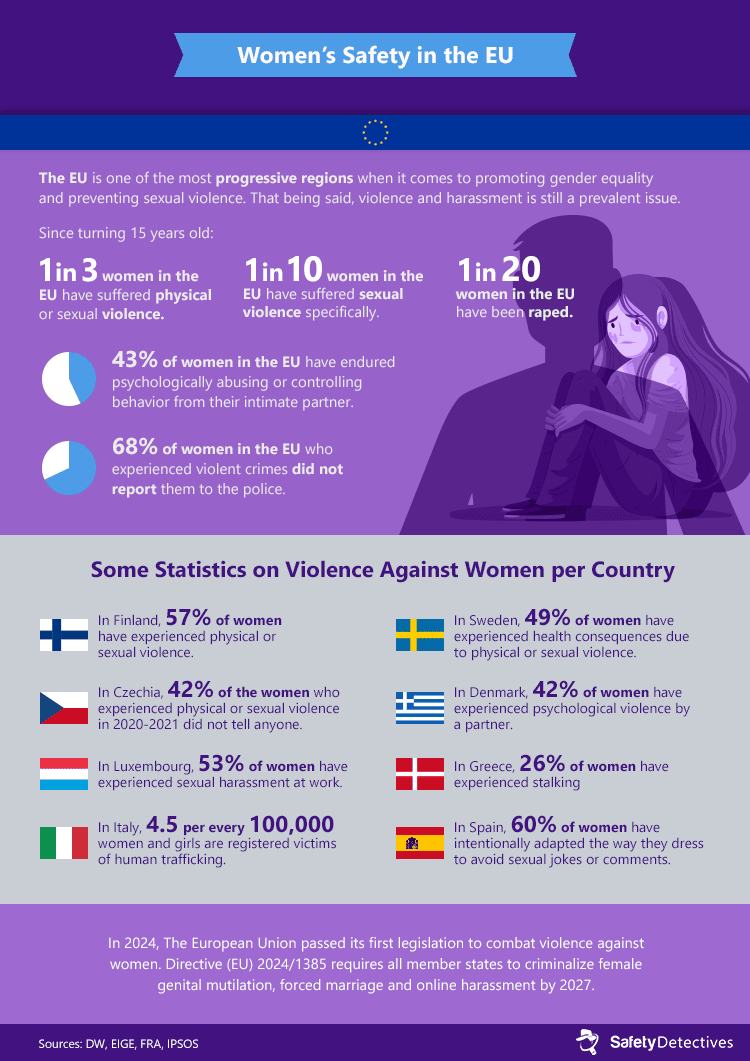
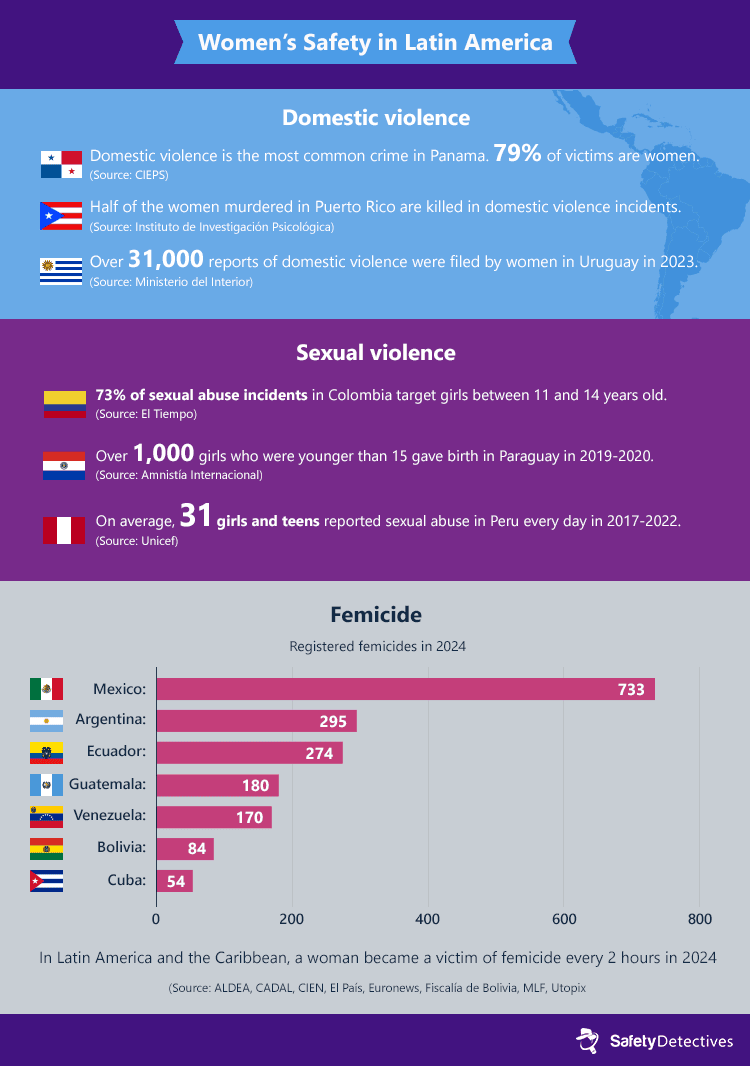
In general terms, our survey’s findings seem consistent with our ranking of the safest countries for women per number of crimes reported. On that ranking, 9 of the top 15 most dangerous countries are in the Americas (including the United States, El Salvador, Peru, Colombia, among others) whereas the majority of the top 15 safest countries are located in Southern and Eastern Europe.
However, we must keep in mind that – while valuable for a general approximation – neither the ranking nor the survey results necessarily convey an accurate depiction of how safe a country is for women. The ranking considers only the official number of reported crimes, whereas the survey considers only the fully subjective perspective of a relatively small number of women.
It could be that countries aren’t actually as safe (or unsafe) as people think they are; or it could be that a higher rate of women admitting being harassed means there’s less of a cultural stigma surrounding violence against women. In order to confirm any of these theories, further research would be necessary — with a much larger and more diverse sample size.
Assessing Women’s Safety All Around the World
Fill out our survey and help us get a better assessment of women’s safety all around the world. You’ll also be able to see responses from other women.
The goal of our survey is to gain a real understanding of women’s safety in different countries in the present day. We ask you to fill out this survey in regards to your current country of residence, not necessarily the country you were born in.
How Can We Make the World Safer for Women?
From public initiatives to individual actions, the worldwide effort to increase women’s safety takes many forms.
Initiatives to Promote Women’s Safety
Many people, companies, and organizations around the world are working to increase women’s safety through various projects and programs. There are all kinds of initiatives in different countries to address the specific safety concerns that women face there.
For example, Brazil is known for its abundance of ride-sharing apps designed specifically for female drivers and passengers. This concept is predicated on the fact that many women feel unsafe when sharing an Uber or Lyft with a male stranger — and their fears are not unfounded.
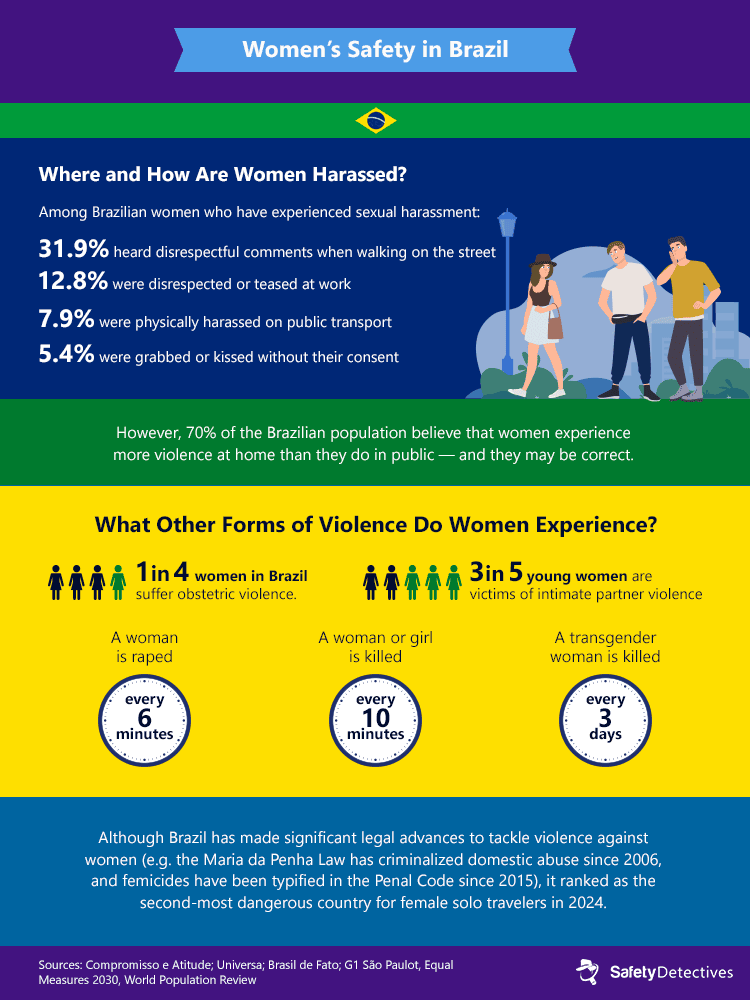
In the United States, Uber is piloting a women-only ride option in Los Angeles, San Francisco, and Detroit. The program, introduced after more than 2,300 sexual assault and harassment lawsuits, allows female passengers and drivers to choose women-only matches to help improve safety and comfort on the platform.
Another example of a startup that promotes women’s safety is Bumble. This popular dating app requires women to send the first message, effectively reducing the number of inappropriate or abusive messages that women receive. At first glance, it may not seem like its main goal is safety, but by giving women greater agency and control in online dating, Bumble is helping women feel safe in its own way.
Improving Women’s Safety in Public Spaces
Several non-profit organizations are also committed to promoting women’s safety, gender equality, and related causes. The most prominent include UN Women, Amnesty International, Futures Without Violence (US), Women’s Aid (UK), and the Canadian Women’s Foundation, among many others.
Some of their initiatives are specific to cities or smaller communities. For instance, in Port Moresby, Papua New Guinea, UN Women implemented the Meri Seif Bus, a safer option for public transport. This project is part of Safe Cities and Safe Public Spaces for Women and Girls, a UN Women initiative that operates around the world, including in the UK.
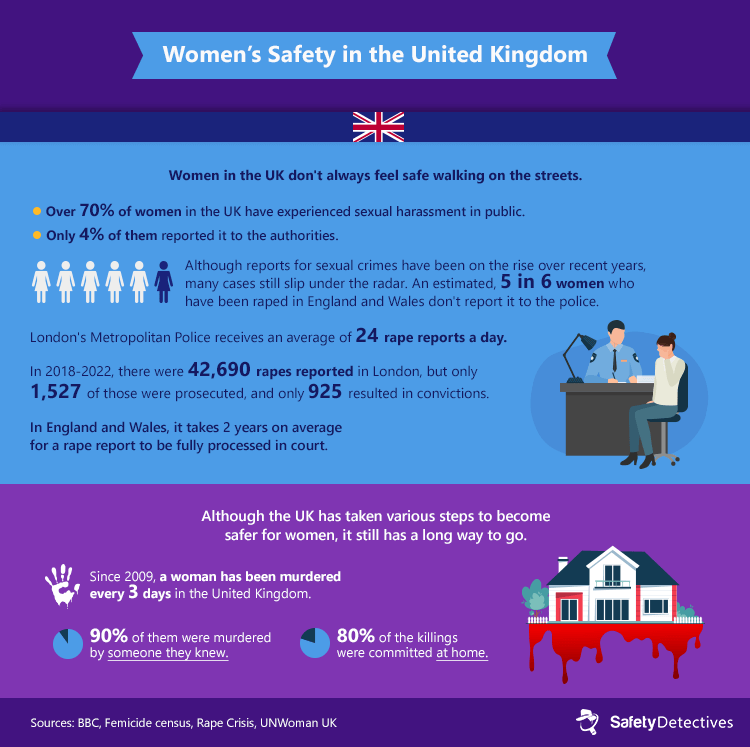
Beyond transportation, other projects focus on identifying urban areas that women perceive as unsafe through digital crowdmapping. Platforms like Free to Be and Safetipin offer apps where women can report their experiences and advice for staying safe in cities around the world.
Whether through innovative apps or social development projects, plenty of people are working to find ways to make the world safer for women. Working directly with these initiatives is a great way to get involved — but you can also make a positive difference through individual, everyday actions.
Women’s Safety Tips & Strategies
Before we dive into this section, it’s important to make it abundantly clear that the crimes of sexual assault, harassment, or abuse are never the victim’s fault.
The onus should not be on women to protect themselves from violence; rather, we should work toward a society in which people are taught that violence is unacceptable. The most important goal is to stop violence from happening in the first place.
In the meantime, however, there are certain strategies that women can employ in order to try and protect themselves in unsafe situations.
How to Keep Yourself Safe
Here are a few tips, techniques, and best practices for staying safe, whether in an unknown environment, a foreign country, your own city, or at home:
- Always let someone know where you are and where you’re going.
- Share your live location with a friend when traveling alone or meeting someone new.
- Learn and practice self-defense tactics from a qualified and recommended trainer.
- Trust your instincts; if you have a feeling that a situation may be dangerous, try to avoid it. For example, if you don’t feel comfortable walking home at night, ask a friend to walk with you or find another mode of transportation.
- Download an app like Noonlight that you can use to quickly and covertly alert contacts in an emergency situation.
- Learn how to automatically activate emergency notifications on your Apple or Android device.
- If you feel threatened, don’t stay silent; loudly draw attention to yourself and your assailant.
- If you’re being abused – physically, emotionally, or psychologically – get help. Speak with a family member or a friend, call a domestic violence hotline, or contact local authorities.
How to Keep Others Safe
Here are some things you can do to help keep women safe, regardless of your own gender:
- Ask your female friends to text you when they get home — and don’t let them forget!
- If you witness a woman being threatened or abused in public, speak up. Ask if she needs help, or even pretend that you know her. If necessary, contact the police.
- Never gaslight a woman or tell her she’s overreacting to a perceived source of danger.
- Do not engage in victim blaming when discussing violence against women.
- Do not participate in or tolerate the harassment of women in public spaces, such as catcalling or making unwanted advances, no matter how harmless it may seem.
- If you notice signs that one of your male friends may be behaving violently towards women, do something about it. Be a true friend by helping prevent violence.
Women’s safety is not solely a women’s issue — nor does responsibility for it fall only on men’s shoulders. We all have to participate in this process, in order to construct networks of support that are stronger than the inevitable threats that women everywhere face.
Where Do We Go From Here?
We firmly believe that education and awareness is the first step toward meaningful change; if people don’t know about a problem, they can’t fix it.
This means it’s essential to continue conducting and publishing research, and making the results widely accessible. UN Women found that only 41% of countries regularly produce data on violence against women, despite the fact that these statistics are vital for public decision-making and for raising awareness.
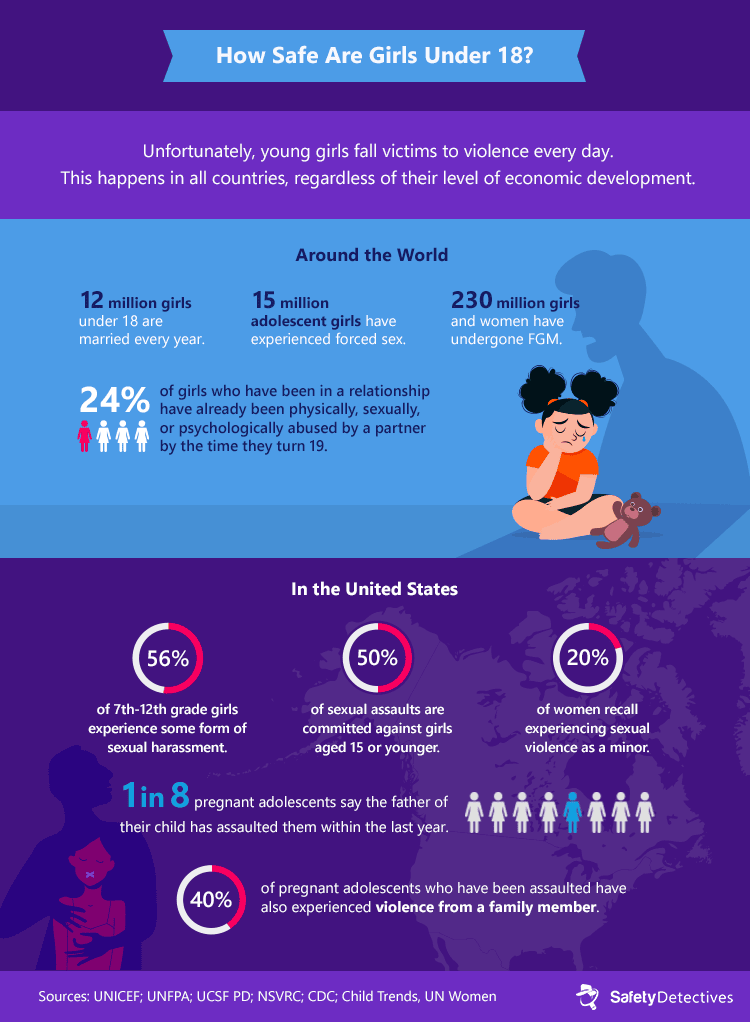
One might assume that it’s most important to educate men, who don’t experience these problems firsthand. While that’s certainly essential, it’s equally important to spread awareness among women. Many of us tend to overlook these issues or take them for granted as a natural part of our lives, rather than asking ourselves what we can do to change them.
We need to work toward equality in the workforce and close the gender pay gap. If women are paid the same as men, they’re likely to be more financially independent and therefore empowered to end abusive relationships (to give just one example).
Furthermore, it’s crucial to educate police officers and investigators on the specific aspects of violence against women. We need to make sure that our laws and law enforcement systems do everything possible to keep women safe.
It’s important to point out that every country needs to participate in this process, regardless of where it ranks on our list — or any list.
Violence against women is not a geographically isolated phenomenon; it’s a problem all over the world, even in places that are relatively safer than others. And even those of us who do feel safe have a moral responsibility to help those that do not, for any reason and at any time.
Ultimately, making the world safer for women requires a united effort between cities, countries, governments, organizations, and individuals around the world. It may be a slow and painstaking process, but as long as we keep moving forward, there’s hope for a better future — one in which no one will be afraid to walk home alone at night.
Research Methodology Notes
Here’s the full rundown of how we calculated our two rankings.
Ranking #1: Crimes Against Women
- Since many countries don’t have publicly available data on these crimes, our research only included the 78 countries for which we could find data in all categories.
- Not all countries define rape and sexual assault in the same way. In Australia, for example, the legal system recognizes three different degrees of sexual assault. In cases like this, we cross-referenced as many data sources as possible to obtain representative numbers.
- For some countries (including Barbados, Belgium, and Guyana, among others), we were only able to find the total number of reported rape cases, including both male and female victims. In these cases, we counted 90% of this number as female victims, based on data from RAINN, which states that 9 out of 10 rape victims are female (this percentage was confirmed by our findings in almost all of the other countries).
- For some countries (including Costa Rica, Kenya, and Lebanon, among others), we only found data reflecting the rate of reported rape cases per 100,000 people (male and female). In these cases, we converted this rate to the total number of rape cases, and then calculated an estimated rate for women using the 90% figure explained above.
In order to calculate a ranking that took into account all four of the variables we examined, we needed to normalize our data. We used the following formula to do so:
Normalized data = (actual value – min value) / (max value – min value)
The minimum value represented the worst case scenario (the highest rate we found), and the maximum value represented the best case scenario (no crimes at all):
- Murder: minimum = 20,* maximum = 0
- Rape: minimum = 143,* maximum = 0
- Sexual abuse: minimum = 242,* maximum = 0
- Domestic violence: minimum = 100, maximum = 0 (shown in percentage)
*Rates calculated per 100,000 women
We also weighted each variable according to the gravity of the offense, to obtain a more accurate result:
- Murder = 3
- Rape = 2
- Sexual abuse = 1
- Domestic violence = 1
For each country, the result was an average of the weighted and normalized data. We then ranked the countries according to these averages.
Ranking #2: Women’s Legal Protections
For the legal ranking, we researched the following types of laws, assigning each country a point value of either 1 or 0, depending on whether or not it has relevant laws in place. In each case, 0 represents the positive alternative, and 1 represents the negative alternative.
-
- Voting – 0 if women are allowed to vote; 1 if they are not
- Inheritance – 0 if daughters and sons inherit the same proportion of assets; 1 if not
- Independence – 0 if women are legally in control of their own lives and decisions; 1 if they are not
- Work choice restrictions – 0 if women are legally allowed to choose their profession or occupation with no restrictions; 1 if they are not
- Sexual harassment at work – 0 if there is a law against it; 1 if there is not
- Pregnancy discrimination – 0 if there is a law that forbids firing a pregnant woman; 1 if not
- “Head of household” equal rights – 0 if a woman can legally be the head of a household with the same rights as a man; 1 if not
- Legal age of marriage for women – 0 if the legal age is 18 or over; 1 if not
- Marriage by abduction – 0 if this is prohibited by law; 1 if it is not
- Marry-your-rapist – 0 if there is no law to excuse rapists who marry their victims; 1 if there is
- Wifely obedience – 0 if there is no law requiring women to obey their husbands; 1 if there is
- Domestic violence – 0 if there is a law against it; 1 if there is not
- Marital rape – 0 if there is a law against it; 1 if there is not
- Abortion laws – In this case, we chose not to have a 0/1 scoring, as in many nations abortion is legal, but only under specific circumstances. So, we assigned the following point values to the countries that prohibit abortions when there is:
- Risk to life – 6 points
- Risk to health – 5 points
- Rape – 4 points
- Fetal impairment – 3 points
- Economic or social difficulties – 2 points
- On request – 1 point
For example, in Brazil, abortion is allowed if the pregnancy presents a risk to life, or in cases of rape or fetal impairment. It is not allowed if the pregnancy presents a non-life-threatening risk to health (5 points), due to economic or social circumstances (2 points), or on request (1 point). So, Brazil received a total of 8 points. A country in which abortion is allowed under all of the circumstances above would receive 0 points (the best possible score).
In order to develop a ranking for women’s safety in legal terms, we normalized and averaged the data collected on abortion laws and the other types of laws listed above:
- Abortion laws: minimum = 21 (not allowed under any circumstances), maximum = 0 (allowed under all circumstances)
- Other laws: minimum = 10 (worst case scenario for every type), maximum = 0 (best case scenario for every type)